


9 Essential Bathroom Safety Products for Seniors Aging at Home
Choosing the right bathroom safety products for seniors can help older adults maintain independence and feel more confident while bathing, showering, and using the toilet. Bathrooms can present safety challenges because wet floors, slippery surfaces, and difficulty standing or balancing may increase the risk of falls.
With suitable safety equipment and a thoughtfully arranged bathroom, families and caregivers can help make everyday routines more manageable. The right products depend on a person’s mobility, balance, strength, bathroom layout, and level of assistance.
In this guide, we explore nine useful bathroom safety products for seniors aging at home, along with tips for choosing equipment that fits individual needs.
1. Bathroom Grab Bars
Grab bars provide a stable handhold when entering or leaving a shower, stepping over a bathtub edge, or moving near the toilet. They can help people maintain balance during these movements.
Benefits include:
- Providing support during transfers.
- Helping users steady themselves when changing positions.
- Offering an additional handhold in key bathroom areas.
Choose grab bars designed for bathroom use and have them securely installed into suitable structural supports according to the manufacturer’s instructions. Avoid relying on towel racks or suction-cup accessories as substitutes for properly installed support bars.
2. Shower Chairs and Bath Seats
Standing for an extended period in the shower may be difficult for seniors with fatigue, weakness, pain, or balance concerns. A shower chair or bath seat allows the user to sit while bathing.
What to consider when choosing one:
- Weight capacity and seat dimensions.
- Non-slip feet and overall stability.
- Height adjustment, if needed.
- Backrests and armrests for additional support.
Make sure the chair is appropriate for the shower or bathtub where it will be used. Follow the manufacturer’s instructions for placement, maintenance, and safe transfers.
3. Raised Toilet Seats
Sitting down on a low toilet and standing back up can be challenging for people with reduced mobility or joint discomfort. A raised toilet seat increases the sitting height and may make transfers easier.
Some models include arm supports, while others attach directly to the toilet.
Before purchasing, check compatibility with the existing toilet, the product’s weight capacity, and how securely it attaches. A healthcare professional or occupational therapist can help determine whether a raised seat is appropriate for the user’s mobility needs.
4. Non-Slip Bath Mats and Shower Surfaces
Wet bathroom floors can become slippery, particularly when soap or shampoo is present. Suitable non-slip surfaces can help reduce slipping hazards.
Consider non-slip mats designed for the specific area where they will be used. Mats should fit properly, stay securely in place, and be cleaned regularly to prevent buildup.
Safety tips:
- Remove loose rugs that may slide or curl at the edges.
- Keep the floor as dry as possible.
- Check mats frequently for wear or movement.
- Choose products intended for wet bathroom environments.
A mat alone cannot eliminate fall risks, so it should be part of a broader bathroom safety plan.
5. Handheld Showerheads
A handheld showerhead allows users to direct water where it is needed while sitting or standing. When paired with a suitable shower chair, it may reduce the need to reach or turn repeatedly during bathing.
Look for a model with an easy-to-use control, a flexible hose of appropriate length, and a secure holder. The showerhead should be positioned so the user can reach it comfortably without stretching or losing balance.
Installation requirements vary, so check compatibility with the existing shower fittings before buying.
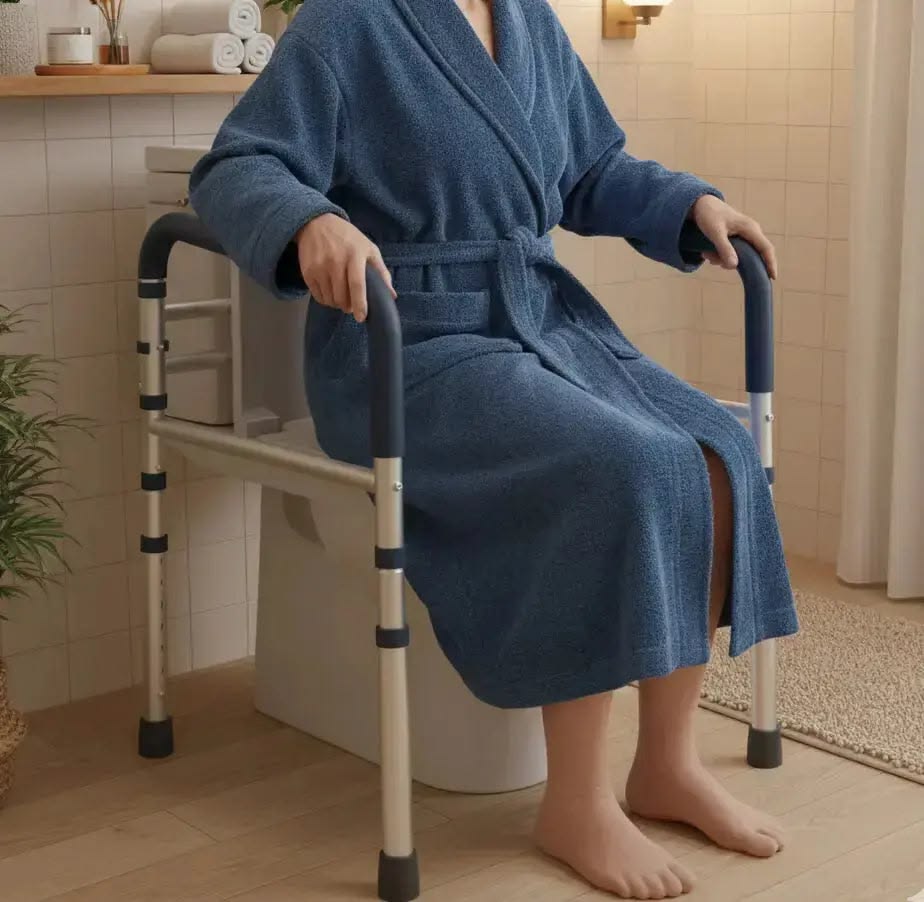
6. Toilet Safety Frames
A toilet safety frame provides armrests on either side of the toilet to support sitting down and standing up. Depending on the design, it may attach to the toilet or rest securely on the floor, bathroom safety products for seniors.
These frames can be useful for seniors who need extra upper-body support when transferring.
Before selecting a frame, measure the available space around the toilet and verify that the model fits securely. Ensure it does not obstruct walking paths or interfere with other bathroom fixtures.
7. Transfer Benches for Bathtubs
Getting into and out of a bathtub can be challenging for people who have difficulty lifting their legs over the tub wall. A transfer bench extends across the bathtub edge, allowing the user to sit down outside the tub and move across the bench with appropriate assistance.
Some designs include backrests and adjustable legs.
A transfer bench may be suitable for certain bathroom layouts, but it requires enough space and correct positioning. Check the bathtub’s dimensions, the bench’s weight capacity, and the user’s ability to transfer safely before choosing one.
8. Bathroom Safety Rails and Support Handles
In addition to grab bars, some bathrooms may benefit from other support rails or handles positioned near entrances or areas where users need extra assistance, bathroom safety products for seniors.
The right product depends on the intended use and the structure where it will be installed. Fixed support rails must be installed according to the manufacturer’s instructions and should be suitable for the forces placed on them.
Avoid placing support handles where they could block movement or create additional obstacles. If the user has significant balance or mobility limitations, ask a qualified professional to assess the safest placement.
9. Motion-Sensor Night Lights
Poor lighting can make it difficult to see wet floors, bathroom thresholds, and obstacles during nighttime visits. Motion-sensor night lights can illuminate the route to the bathroom and help users see where they are walking.
Consider placing lights along the path to the bathroom and near the entrance, ensuring that they do not create glare or obstruct movement,bathroom safety products for seniors.
Other helpful lighting improvements include brighter overhead lights and accessible switches. Keep cords away from walking areas, and use products appropriate for the bathroom environment.
How to Choose the Right Bathroom Safety Products for Seniors
Not every senior needs the same equipment. The most useful products are those that address specific challenges in the person’s daily routine,bathroom safety products for seniors.
Use these steps to make a practical choice:
- Assess mobility needs: Consider balance, strength, joint movement, and the ability to stand or transfer.
- Review the bathroom layout: Measure the shower, bathtub, toilet area, and available walking space.
- Check product specifications: Review dimensions, weight limits, installation requirements, and compatibility.
- Prioritize secure installation: Follow manufacturer instructions and seek qualified installation when necessary.
- Ask for professional guidance: An occupational therapist or other qualified healthcare professional may recommend equipment based on the user’s abilities and environment.
For additional fall-prevention guidance, visit the National Institute on Aging.
Explore Home Safety and Mobility Products at Care Plus DME
Care Plus DME helps customers explore durable medical equipment and products designed to support everyday care needs at home. When comparing bathroom safety products, review each item’s specifications carefully to determine whether it suits the intended user and bathroom setup,bathroom safety products for seniors.
Visit Care Plus DME to explore available products and review details before you buy.
Frequently Asked Questions (FAQs)
1. What are the most useful bathroom safety products for seniors?
Common options include grab bars, shower chairs, raised toilet seats, non-slip mats, toilet safety frames, and handheld showerheads. The best choices depend on the individual’s mobility needs and bathroom layout, bathroom safety products for seniors.
2. Are grab bars better than towel racks for support?
Yes. Grab bars designed for weight-bearing support and installed correctly are intended for this purpose. Towel racks are not designed to support a person’s body weight and should not be used as substitutes, bathroom safety products for seniors.
3. Does every senior need a shower chair?
No. A shower chair may be useful for people who have difficulty standing for long periods, experience fatigue, or have balance concerns. A healthcare professional can help determine whether it is suitable, bathroom safety products for seniors.
4. How can I make a bathroom safer for an older adult?
Improve lighting, remove loose rugs, keep floors dry, install appropriate grab bars, and consider mobility aids that address the person’s specific needs. Professional assessment can help identify additional risks.
5. How do I choose the correct bathroom safety equipment?
Measure the available space, check product dimensions and weight capacity, review installation requirements, and consider the user’s ability to move safely. Seek professional guidance when mobility or transfer needs are complex, bathroom safety products for seniors.
Conclusion
The right bathroom safety products for seniors can support safer daily routines and help older adults maintain independence at home. From grab bars and shower chairs to raised toilet seats and motion-sensor lights, each product serves a different purpose.
Before purchasing equipment, assess the user’s needs, measure the bathroom, and confirm that products are suitable and installed correctly. A combination of appropriate equipment, good lighting, clear walking paths, and professional guidance can help create a more accessible bathroom environment, bathroom safety products for seniors.
Disclaimer: This article is for general informational purposes only and does not replace professional medical advice or an individualized home-safety assessment. Product suitability varies by person and bathroom setup. Follow manufacturer instructions and consult a qualified professional when needed.