

7 Essential Mobility Aids That Can Make Daily Life Easier for Seniors
7 Essential Mobility Aids That Can Make Daily Life Easier for Seniors
Mobility aids for seniors can make everyday activities easier, safer, and more comfortable for older adults who have difficulty walking or maintaining balance. From canes and walkers to wheelchairs and other supportive equipment, the right mobility aid can provide additional stability and help seniors move more confidently at home and in the community.
Here’s the good news: mobility aids exist to make these moments easier, safer, and a lot less stressful! Whether you’re searching for solutions for yourself or a loved one, finding the right equipment can restore confidence and bring back a sense of freedom.
In this guide, we’re walking through seven essential mobility aids that can truly transform daily life for seniors. From walkers to stairlifts, we’ll cover what each option does best, who it’s suited for, and how to pick the right one. Let’s get started, mobility aids for seniors.
1. Walkers and Walking Frames
Walkers are one of the most popular mobility aids out there, and for good reason. They offer excellent stability, helping to prevent falls while supporting confident, independent movement, mobility aids for seniors.
There are a few different types to choose from:
- Standard walkers have four rubber-tipped legs and no wheels, offering maximum stability. These are great for seniors who need significant support.
- Wheeled walkers (two-wheel) combine stability with easier mobility, since the front wheels glide while the back legs stay planted.
- Rollators are fully wheeled (usually with three or four wheels) and often come with a built-in seat and storage basket. These are ideal for seniors who need support but want the freedom to move more fluidly through their day.
When choosing a walker, think about the user’s strength, balance, and typical environment. Someone who spends a lot of time outdoors might love a rollator, while someone managing a more significant balance issue might benefit most from a standard walker, mobility aids for seniors.
2. Canes and Walking Sticks
Canes are perfect for seniors who need a little extra balance support but don’t require the full stability of a walker, mobility aids for seniors.
- Single-point canes are lightweight and simple, ideal for those with mild balance concerns.
- Quad canes have a four-pronged base, offering more stability and weight distribution. These can be especially helpful after an injury or for those with more noticeable balance challenges.
Proper fit matters! A cane should reach the user’s wrist crease when their arm is relaxed at their side, with the elbow bent at about a 15-degree angle. A comfortable, non-slip grip also makes a big difference in everyday use.
So when should someone use a cane instead of a walker? Canes work best for those who need light assistance with balance, not full-body support. If it feels like more stability is needed, it may be time to consider a walker instead, mobility aids for seniors.
3. Crutches and Forearm Supports
Crutches are often associated with short-term injuries, but they also play an important role in long-term mobility support.
- Underarm crutches are commonly used for temporary injuries, like a broken leg or ankle sprain.
- Forearm crutches (also called Lofstrand crutches) are often used for longer-term conditions, offering more wrist and arm support for extended use.
Proper fitting is essential here. Crutches that are too tall or too short can cause discomfort or even injury, so it’s worth having a healthcare professional check the fit and demonstrate the correct walking technique.
For seniors recovering from surgery or an injury, crutches can be a helpful bridge back to full mobility, offering support while strength and balance are restored.
4. Wheelchairs and Mobility Scooters
For seniors with more significant mobility limitations, wheelchairs and scooters open up a whole new world of independence, mobility aids for seniors.
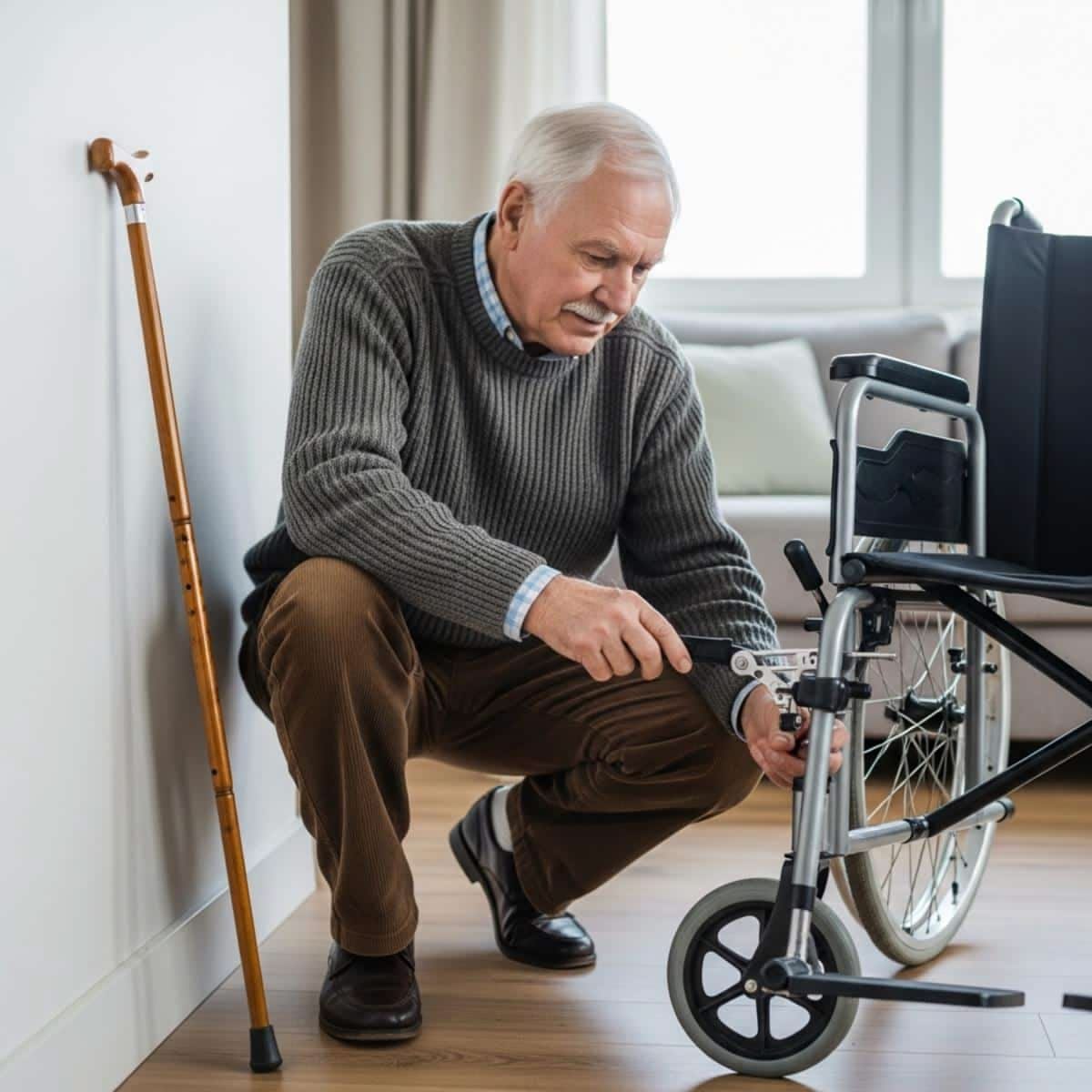
Manual wheelchairs are lightweight and cost-effective, but they do require upper body strength to operate (or a caregiver to assist). Electric wheelchairs, on the other hand, are powered and much easier to maneuver, making them a wonderful option for those with limited arm strength.
Mobility scooters are another fantastic choice, especially for seniors who want to get outside and explore. They’re great for longer distances, like a trip to the grocery store or a stroll through the park.
When choosing between these options, think about where the equipment will be used most. Indoor spaces with tight turns might call for a compact wheelchair, while outdoor adventures might be better suited to a scooter with sturdier tires and a longer battery life. Many models also offer customizable seating, armrests, and storage to fit individual needs.
5. Grab Bars and Handrails
Sometimes the simplest additions make the biggest difference. Grab bars and handrails are incredibly effective at preventing falls in high-risk areas like bathrooms and hallways, mobility aids for seniors.
Key installation spots include:
- Next to the toilet
- Inside and outside the shower or tub
- Along hallways and staircases
Grab bars come in a variety of styles and finishes, so they can blend seamlessly with any home decor while offering sturdy, weight-bearing support. They’re also one of the most affordable home modifications available, making them a smart starting point for improving safety at home, mobility aids for seniors.
6. Stairlifts and Vertical Lifts
For seniors living in multi-story homes, stairs can quickly become one of the biggest daily challenges. That’s where stairlifts come in!
- Straight stairlifts are designed for staircases without curves or landings, making installation quicker and more affordable.
- Curved stairlifts are custom-built to fit staircases with bends or turns, offering a tailored solution for more complex layouts.
Installation typically takes just a day or two, and regular maintenance helps keep the lift running smoothly for years. While stairlifts are a bigger investment compared to other mobility aids on this list, they can make a world of difference for seniors who want to stay safely in their own homes,mobility aids for seniors.
7. Transfer Boards and Lift Cushions
Transitioning between surfaces, like moving from a bed to a wheelchair, can be one of the trickiest and most injury-prone moments in daily care. Transfer boards and lift cushions are designed to make these moments smoother and safer.
Transfer boards create a bridge between two surfaces, allowing for a smooth, controlled slide rather than a risky lift. Lift cushions, on the other hand, use a gentle lifting motion to help seniors rise from a seated position with much less strain.
These tools aren’t just helpful for seniors. They’re also a huge benefit for caregivers, reducing the physical strain of manual lifting and helping to prevent injury for everyone involved.
Finding the Right Mobility Aid for a Better Quality of Life
From walkers to stairlifts, each of these mobility aids plays a unique role in helping seniors move through their day with more confidence, safety, and independence. The right choice really depends on individual needs, so it’s always worth having a conversation with a doctor or physical therapist before making a decision. They can offer personalized recommendations based on strength, balance, and overall health, mobility aids for seniors.
Investing in the right mobility aid isn’t just about getting from point A to point B. It’s about preserving independence, reducing the risk of falls, and making everyday life feel just a little bit easier. And honestly, that peace of mind is worth every bit of the effort, mobility aids for seniors.